Nurturing the next generation of African conservation Leaders
At Space for Giants, we believe that the future of conservation depends on investing in people. Alongside protecting ecosystems and supporting local communities, we are committed to cultivating the next generation of African conservation leaders. To achieve this, we provide paid internship opportunities to university students each year from Kenyan institutions, alongside a strategic partnership with the African Leadership University (ALU). Through this immersive pipeline, students gain hands-on experience working directly with conservation practitioners across community engagement, technology, and field operations.
Over three months as a Community and Field Intern based in Nanyuki, Khan Emery Rugira worked on everything from GIS mapping and EarthRanger to community perception surveys and reporting. As he wraps up his internship, we caught up with him to reflect on his time with Space for Giants.
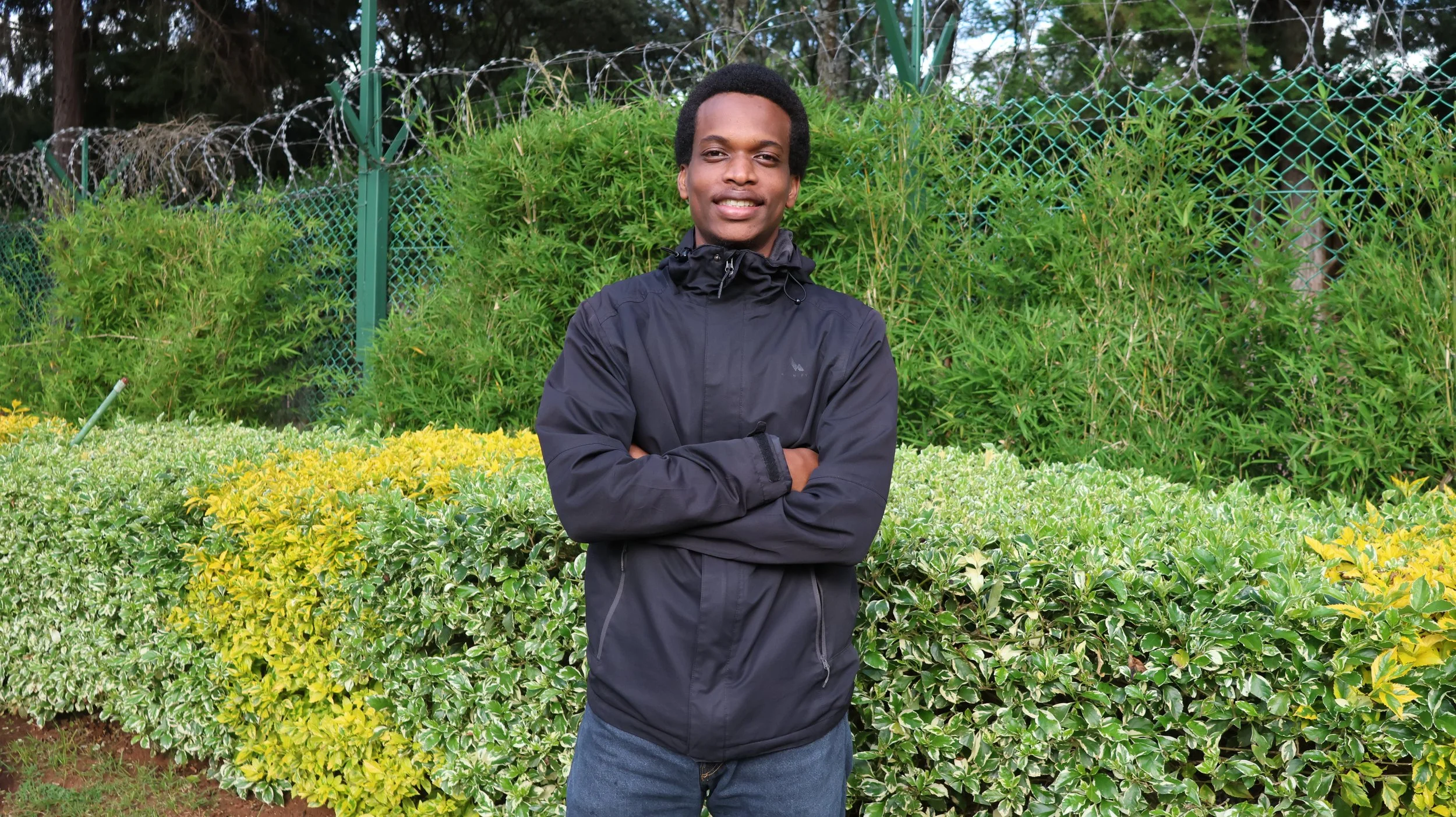
Tell us a little about yourself and how you found your way into conservation.
I recently graduated from ALU with a degree in Entrepreneurial Leadership, focusing on wildlife conservation. That combination might sound unusual at first, but at my university, learning is mission-driven. You don't just study a subject; you study it in service of a bigger purpose. Growing up, I spent a lot of time in nature and visiting protected areas like Akagera National Park in Rwanda. When I arrived at ALU, I discovered the School of Wildlife Conservation (SOWC) and quickly realised that conservation was where I wanted to build my career. My professors walked alongside me through all of it, and the SOWC Director, Richard Vigne, became a mentor from the very first time we met. His belief in what I was doing has meant a great deal. For me, learning has always been about purpose. I wanted to do work that was bigger than myself.
How did you first come across Space for Giants?
My first encounter was during an immersive field programme in Laikipia in 2025, through my school. We met Alberto Borges, Space for Giants' Conservation Programme Manager, who introduced us to the work being done to reduce human-elephant conflict through electric fencing systems and community partnerships. Coming from Rwanda, the conservation model here was fascinating as it was completely different from what I knew. In Laikipia, communities live alongside conservancies, and wildlife roams freely. I was intrigued and wanted to understand it deeper. Alberto had mentioned that Space for Giants was launching an internship programme, so I stayed on the lookout. When applications opened, I applied immediately. Receiving the call that I had been selected, I accepted without hesitation.
What kind of work did you do during your internship?
My role was Community and Field Intern, and the work touched a range of operational areas. A significant portion of my time was spent on GIS and farm digitisation - mapping farms along the fence line - which was genuinely challenging at first. But with repetition and focus, I kept improving. I also worked on digitising features for the Pian Upe Wildlife Reserve in Uganda, which SFG partners with. On the data side, I logged human-elephant conflict incidents into EarthRanger, working directly from reports received from scouts in the field, and contributed to monthly reports and M&E meeting minutes, including documentation from an EarthRanger retraining at Ol Maisor Conservancy.
The team welcomed me in a way that I did not take for granted, showing me the ropes and actively creating space for me to learn, which matters enormously when you are in a new environment and country. I had studied many of these concepts in my coursework at ALU: GIS, data management, and stakeholder engagement. But there is a vast difference between understanding a concept on a slide and practising it in a room full of seasoned professionals. The culture at the office reinforced something I believe deeply: practice and a willingness to learn beat talent, every single time.
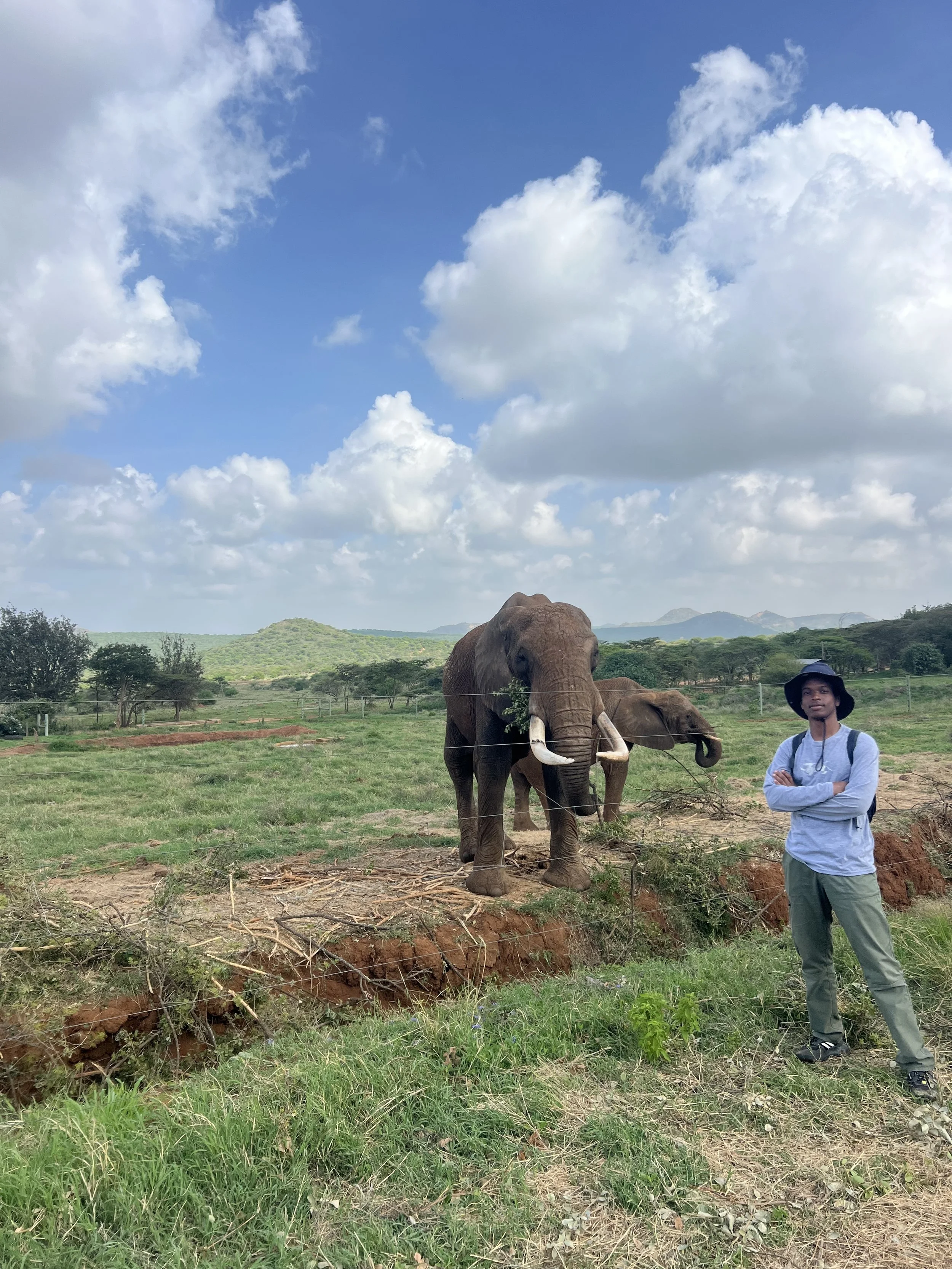
What surprised you most about working at Space for Giants?
Before joining, I imagined conservation mostly as field work. What surprised me was how interconnected and layered everything actually is. Take, for instance, the andBeyond Suyian lodge, a bespoke safari experience set within the 44,000 acres of northern Laikipia that Space for Giants has worked for years to protect. Seeing an enterprise like that up close: five private suites deeply embedded in the landscape, managed by a fully dedicated team, reframed for me what the 'business of conservation' I had studied in school actually means in practice. It is not just about keeping animals safe. It is about building sustainable, integrated models where conservation and community benefit reinforce each other continuously. That has added significantly to how I think about the future of the sector.
The steepest learning curve, however, was technology. At university, we covered it, but at a level that, looking back, was mostly on the surface. The actual breadth of what technology does in modern conservation practice; the tools in active daily use, the specificity of how data flows from a scout's phone to a dashboard to a management decision, none of that came through fully in the classroom. It confirmed for me that technology in conservation is not a niche skill or a nice-to-have, it is core infrastructure.
What’s one project that meant the most to you?
Without question, it was a community perception survey I supported. We went out to collect structured feedback from communities living alongside the fence about their experiences, concerns, and what they had observed change over time, specifically, how the fences had affected the frequency and intensity of human-wildlife conflict in their daily lives. What made it meaningful was not just the fieldwork itself, but what it points toward: the ability to communicate impact through data. Numbers and lived stories together. Too often in conservation, the communities most affected are the least heard. This project was an attempt to change that, to bring their voices into a form that decision-makers and funders could actually see and act on. I believe deeply in data as a tool for communication, and this was a chance to put that belief to work.
As you wrap up your time here in Nanyuki and look towards the future, what’s next for you?
I came here as a conservation student, but I leave understanding that conservation in Africa is never a single discipline - it is a complex web. Field management, data technology, community engagement, sustainable finance, and policy, each thread matters, and none work in isolation. As I head into my Master's studies and future professional leadership, my ambition is to hold that complexity without flattening it. Africa's ecosystems and the communities who call them home deserve leaders who understand both the fence and the spreadsheet, both the community town hall and the satellite image. My time at Space for Giants hasn’t just taught me that; it has redefined how I intend to lead. I am excited to carry that vision forward.
