
Meet Charles Kinyua: Two Decades on the Frontline of Human-Elephant Conflict
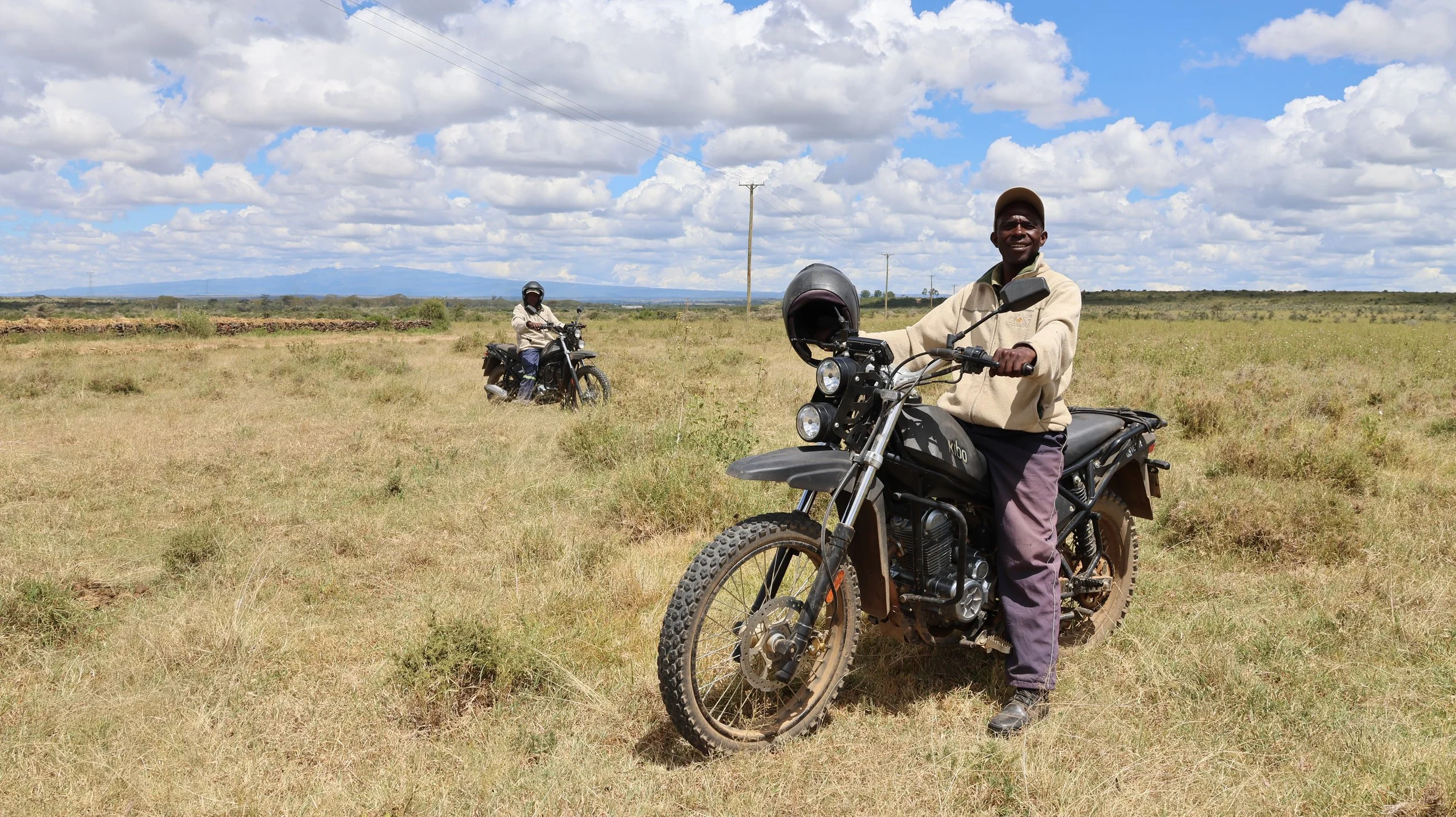
Charles Kinyua has spent more than two decades working on the frontlines of human-elephant conflict in Laikipia. As Space for Giants’ longest-serving field scout, his career traces the full arc of modern conservation in the region, from the early days of manual mapping and experimental deterrents, to today’s use of satellite collars, real-time data systems and electric fences.
But long before he joined conservation work, Charles was a child growing up on the edge of Rumuruti Forest, where elephant farm raids shaped everyday life. In this conversation, he reflects on that journey, the evolution of the tools used to manage conflict, and the elephants he still knows by name.
Where did your connection to elephants actually start?
I was born on the edge of the Rumuruti Forest in an area called Salama, and our family land bordered the forest. Elephants would raid our farms constantly, so I grew up right in the middle of severe human-elephant conflict. Our daily routine revolved around them. We would wake up long before dawn to light a bonfire on the farm edge and keep watch, taking shifts with our father so he could rest, and then we would head off to school. On the way home in the evening, our main task was to bring dry firewood back to the farm to fuel the bonfire for the upcoming night watch. We also kept a pile of stones ready to throw at the elephants to chase them off. As kids, we actually viewed it as a game and enjoyed throwing the stones, and that is how I first got to know them.
How did your journey with Space for Giants begin, and what did the organization look like in those early days?
When I finished school, I got into building and construction. The community was still contending with the issue of elephant raids. Dr. Max Graham started his research in the early 2000s while he was still a PhD student. In those days, it was an incredibly small, grassroots operation. We didn't have vehicles; we used bikes, and there were only four employees. My entry point came through someone from the Laikipia Wildlife Forum who knew I understood wildlife and knew the region well, so he introduced me to Max. At the very beginning, I split my time between construction work and supporting Max’s research, but eventually, I had to choose. I chose to go with conservation full-time because it was in my heart; I wanted to change the story I lived through as a child.
What did your daily fieldwork actually look like before modern tracking technology existed?
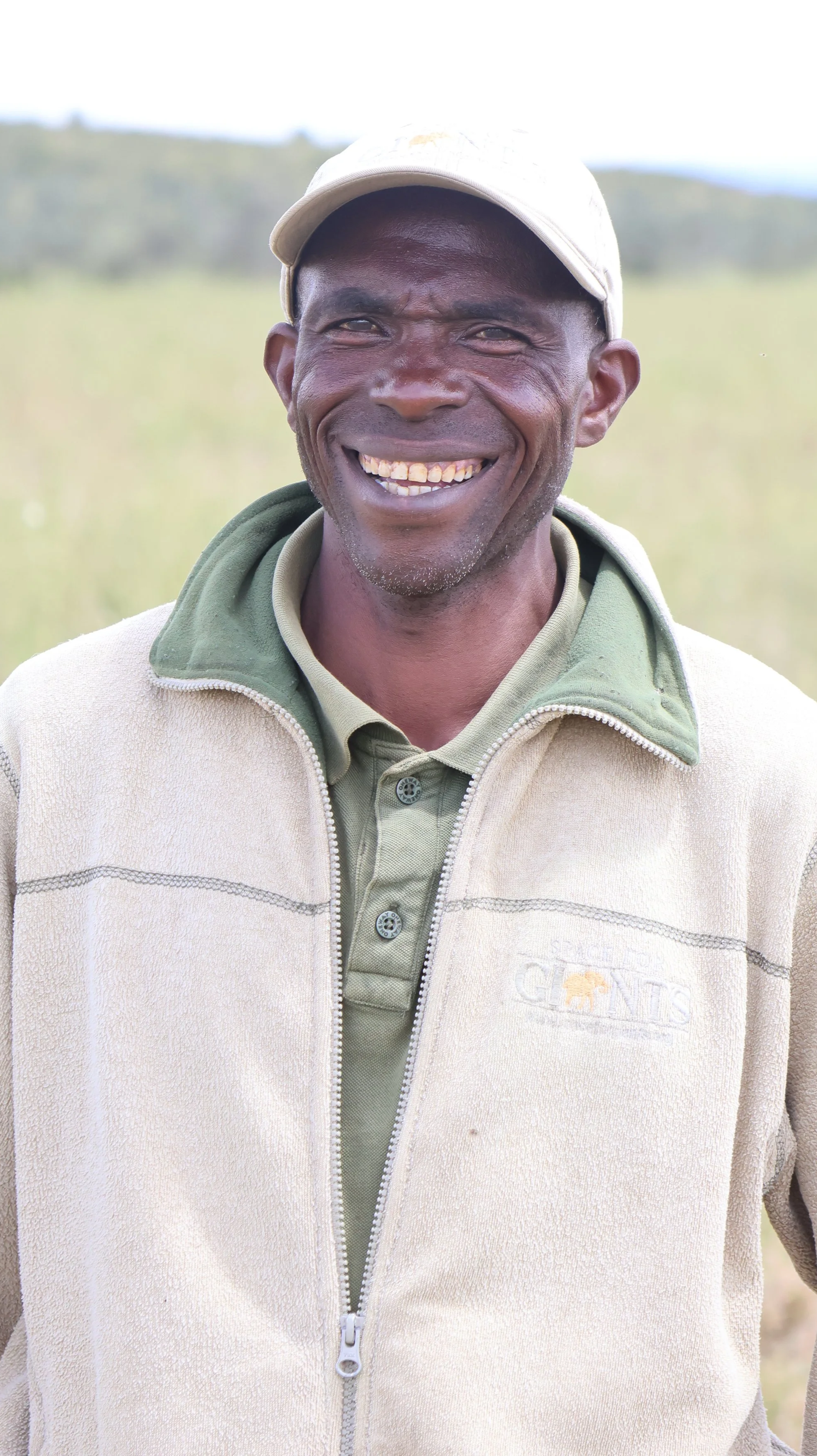
We were hired as scouts to collect baseline data on the ground. Our system relied on physical tracking and elephant identification. We would manually measure the footprints of elephants. By studying the size and the shape of the print- knowing that a round print generally indicates a front foot while an oval print indicates a back foot- we could estimate the size of the elephant. We used these tracks to map their movements, determine if a herd was new to the area or migrating, and track which individuals were entering community smallholder farms. We also collected carcasses across the Laikipia region to study mortality rates and determine whether an elephant died of natural causes or illegal poaching, which was incredibly rife at the time.
Once you gathered the baseline data, how did the team tackle the escalating conflict between farmers and elephants?
Around 2005 and 2006, human-elephant conflict reached crisis levels. Elephants were raiding local villages constantly, and we desperately needed mitigation methods. Our first experimental approach was trying to surround community farms bordering conservancies or forests with chilli-pepper fences. We would wrap long sisal ropes around the boundaries of the farms and smear them with a thick mixture of ground chilli and engine grease. The idea was that when an elephant approached the farm line, the irritation caused by the spice would deter it. We also tried burning a mixture of dried elephant dung and ground chilli so the heavy smoke would drive them away. It was short-lived. Elephants are highly intelligent; after a while, they figured out how to bypass these ropes. That failure moved us into our next phase: electrified fencing. SFG began fundraising to scale up infrastructure. We deployed our first flagship electrified site in Mutara in early 2018. By 2019, we expanded the fence lines from Ngorare all the way to Mathira. The impact was immediate and massive. It was so effective that the local communities completely championed the project, and individual farmers who had the financial means even started investing in fencing their own properties.
Why are fences still such an important tool today?
People sometimes think fences are about keeping wildlife away from people, but for me they are really about creating predictability. Before the fences, nobody knew when elephants would arrive. When I was growing up in Rumuriti, our family could lose an entire season's harvest overnight. Today, the fences give communities confidence to farm and invest in their land while still allowing elephants to move through the wider landscape. They're not perfect. We deal with issues like vandalism and sometimes very intelligent bulls that learn how to break them and find a way through. That's why the work doesn't end when a fence is built. It has to be monitored, maintained and repaired constantly.
What does your daily job look like today as a community scout?
I monitor elephant movements across high-conflict hotspots, particularly around Kifuko Ranch and Pesi, where there is an immense amount of community farming. Every morning, the first thing I do is check EarthRanger, our digital visualization platform. I review all satellite telemetry data to see if any collared elephants moved toward the community villages during the night. If there was a midnight crop raid, I immediately deploy to the villages to survey the ground situation. I assess the damage, compile the data and send it directly to our head office. I also coordinate with the Kenya Wildlife Service (KWS) so they can verify the damage on the ground.
The tracking collars are an invaluable early-warning system. We use camera traps and field observations to identify the most notorious, stubborn crop-raiding bulls, and then we fit them with satellite collars. Every night at around 9:00 PM, I log onto EarthRanger to pinpoint their exact coordinates. If the system shows a collared bull moving deliberately out of the conservancy and toward human settlements, my job is to act immediately. I have the phone numbers of community representatives in every single village in the areas I patrol. I call them directly to warn them, and simultaneously alert the KWS rapid-response teams to deploy and herd the elephants back before they reach the crops.
You've spent so much time with these elephants that you can identify specific individuals on sight. Who are some of the characters you know best?
I can read their body structures, ear notches and social pairings like a book. I know exactly who walks together. For example, Melnikov and Uzima are inseparable, and by looking at their physical traits I can tell they belong to the same genetic family. Right now, we monitor five key collared bulls in the Kifuko and Mutara sectors, though we've had some heartbreaking losses recently. Last November, we lost four major bulls. One was Popote, a collared bull who broke his leg after falling into a ravine while migrating from Kifuko to Rumuruti Forest. Another was Mutara, a notorious crop-raiding bull that was sadly killed following a crop-raiding incident. We also lost Rumah, a massive and aggressive bull with no tusks, who led a bachelor group of eight bulls across huge migratory routes before succumbing to a bullet wound in his leg.
But there are still some legendary characters out there. Uzima, who is around 65 years old, is a creature of habit. He follows highly specific routes within Kifuko Ranch and completely refuses to deviate from them. We once tried to gently herd him away using a helicopter, and within 48 hours he had returned to his exact path. He never travels towards Rumuruti; Kifuko is his home. Melnikov is closely bonded with Uzima and rarely leaves Kifuko, preferring to stay close to permanent water sources. Naledi is very different. He is one of the most notorious and technically adept fence breakers we know. He has no geographic loyalty and will travel huge distances, raiding one farm and then turning up somewhere completely different. Roughback is another dominant bull we monitor, although his tracking collar is currently dormant and due for replacement.
Have you seen a tangible shift in the community's relationship with wildlife since you started?
The transformation is undeniable. Before our fencing initiatives in Mutara, elephants raided farms almost every single night. Since Space for Giants entered the ecosystem and partnered directly with the local communities, our data shows conflict incidents have plummeted drastically- with numbers down by around 70% since 2016. This security has directly translated into significantly larger agricultural harvests and food security for the entire community. Because the local people see that we are actively on their side and protecting their livelihoods, they are incredibly supportive of our presence.
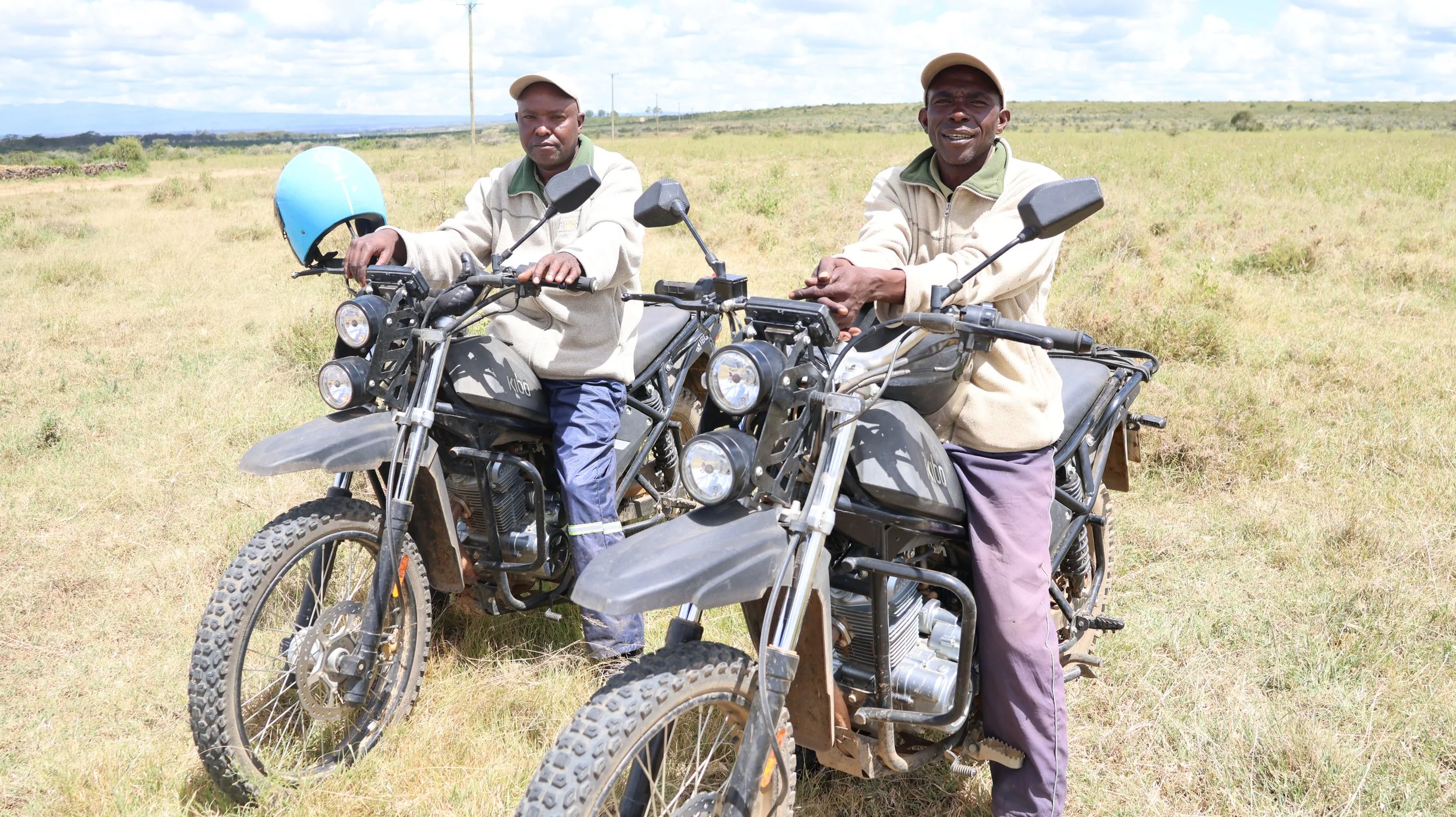
Charles and fellow scout Reuben out in the field
Charles’ story reflects many of our community scouts, who spend their days on the frontline of human-wildlife coexistence. Click here to donate if you would like to support the ongoing work of these teams.
