
A Wildlife Vet Explains What It Takes to Safely Collar an Elephant
Fitting a GPS collar to a wild elephant is one of conservation's most intricate field operations. The information it provides helps conservation teams understand how elephants move across the landscape and anticipate conflict before it happens, supporting the safety of surrounding communities while ensuring elephants continue to thrive in the wild. But gathering that information means temporarily immobilising one of the world's largest land mammals, a process that demands meticulous planning, precision and teamwork at every stage.
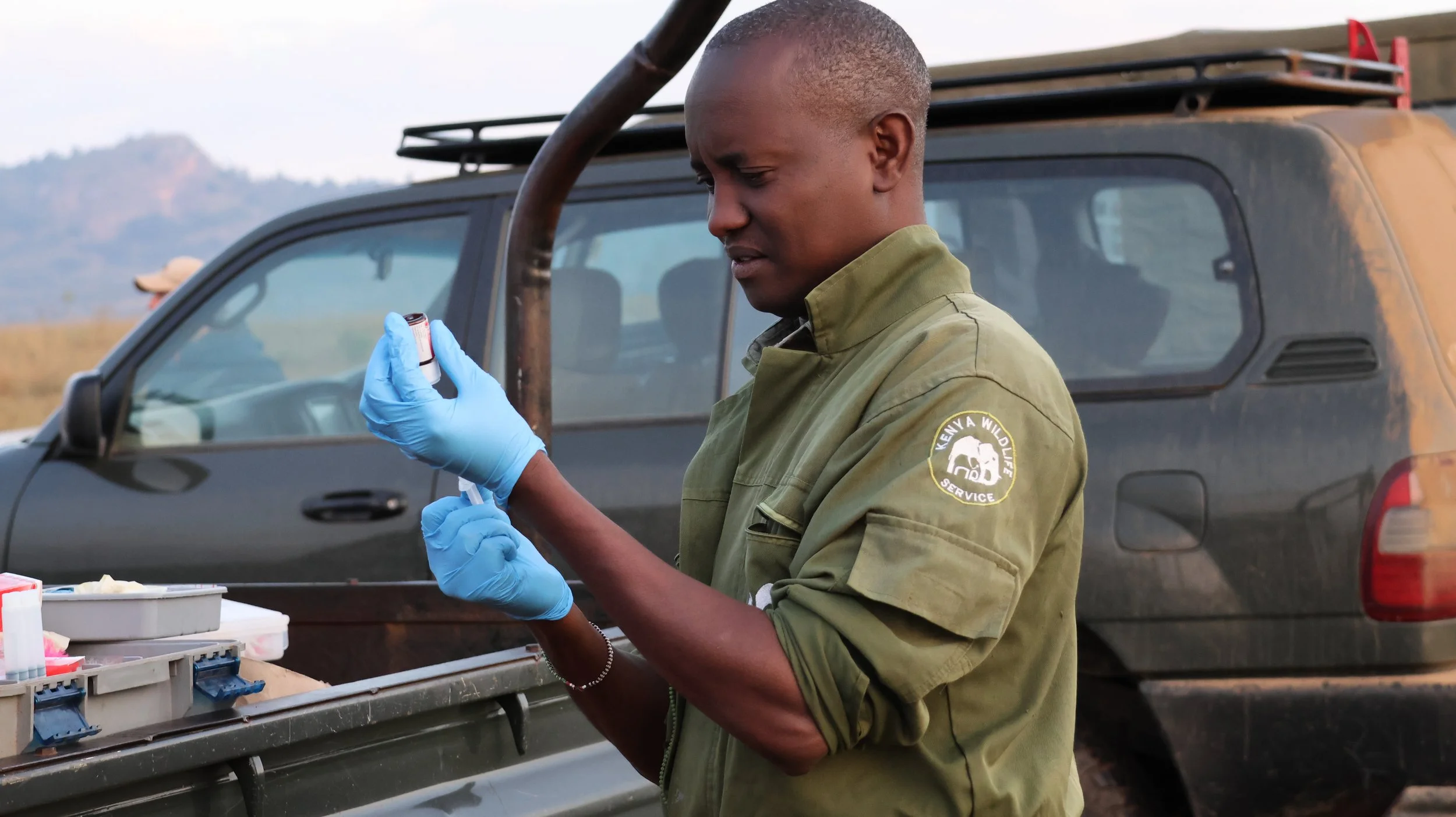
Dr Mathew Mutinda, a Wildlife Veterinarian with the Kenya Wildlife Service, has spent nearly 18 years on the front line of wildlife conservation, safely immobilising more than 1,000 elephants and around 400 rhinos. During a recent elephant collaring operation at Lolldaiga Conservancy, carried out in partnership with Space for Giants and Kenya Choppers, he explained what it takes to collar an elephant, the science behind the procedure and the responsibility that comes with caring for wildlife at this scale.
Why are elephants fitted with GPS collars, and what does that information tell us?
Elephants move enormous distances looking for food and mates, and in the process they sometimes come into conflict with nearby communities. Collars allow us to understand those movements: where and when elephants travel, where their dry-season and wet-season ranges are and which routes they repeatedly use. This information helps us anticipate when elephants may move towards communities, allowing teams to respond earlier and mitigate conflict before incidents occur. It also helps identify important wildlife corridors, which are essentially like highways that elephants use to move between different areas, so they can be better protected. Ultimately, this data helps us better manage elephant movements and promote coexistence between people and wildlife.
What does preparation look like before a collaring operation?
Deploying collars is a very sensitive exercise, and the preparations begin the day before. We’re dealing with very important drugs, weapons and very large animals, so at every stage you’re thinking about the safety of the elephant, the people involved and everyone around the operation. The day before, we prepare and check all the drugs, make sure the helicopter is ready, confirm the team, check the equipment and ensure the reversal drugs are correctly labelled and organised. Then, on the morning of the operation, we prepare the darts and, once everything is ready, wait for the field team to locate the elephants.
What do you calculate before darting an elephant?
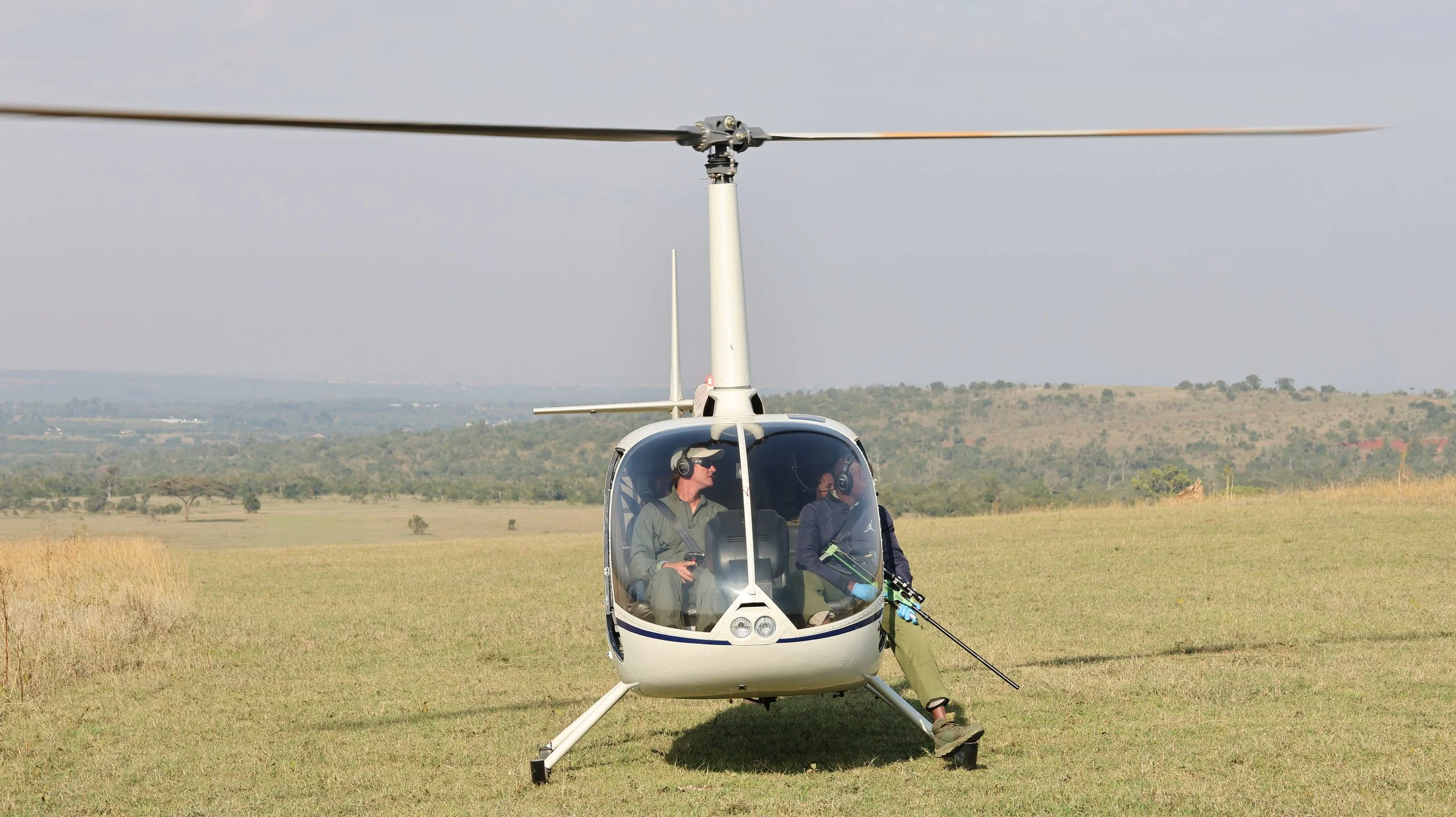
Darting an elephant is a very intricate process. First, the veterinarian and the helicopter pilot must have very good chemistry. We often joke that we’re like an old couple because you really have to know what the other person is going to do without talking to each other. At that moment, you’re judging the size of the elephant so you can calculate the correct drug dose. At the same time, you’re in a moving helicopter, the elephant is moving, and there’s wind, speed and terrain to think about. Wind and terrain are two of the biggest factors. Elephants usually don’t like staying out in the open because there’s nowhere to hide, so they’re much more likely to be inside thick bush. Sometimes we have to carefully move them into a more open area before we can dart safely. You’re often darting from an open door helicopter, so you also have to be a very good marksman. That’s a specialised skill which I was fortunate to develop over time from colleagues in the special forces.
Where do you aim when darting, and how do you safely manage an elephant once it’s immobilised?
Placement is extremely important because the drug needs to enter the bloodstream quickly. We’re looking for a well-vascularised area, normally the left or right rump. There’s plenty of muscle there and good blood supply. So although the elephant is huge, we’re actually aiming for a very specific area, which is why it can take some time. The moment the dart goes in, I start my stopwatch. The period between darting and the elephant lying down is what we call the induction time. Normally, that takes anywhere between one and twelve minutes, depending on the size of the elephant, the drug dose and how well the dart was placed. During that entire period, you’re watching carefully because you want the elephant to lie down in a safe place.
Once they do, one of my biggest concerns is the trunk. If the elephant lies on its trunk, or a tusk presses against it, that can obstruct its breathing. We also position the elephant carefully because they have enormous stomachs, and if the stomach presses on the lungs, it can also affect breathing. We then cover the eyes using one ear rather than a blindfold, cool the animal with water (which is why you will see jerrycans around) and begin monitoring it as the collar is fitted.
How do you make sure the collar does not affect the elephant?
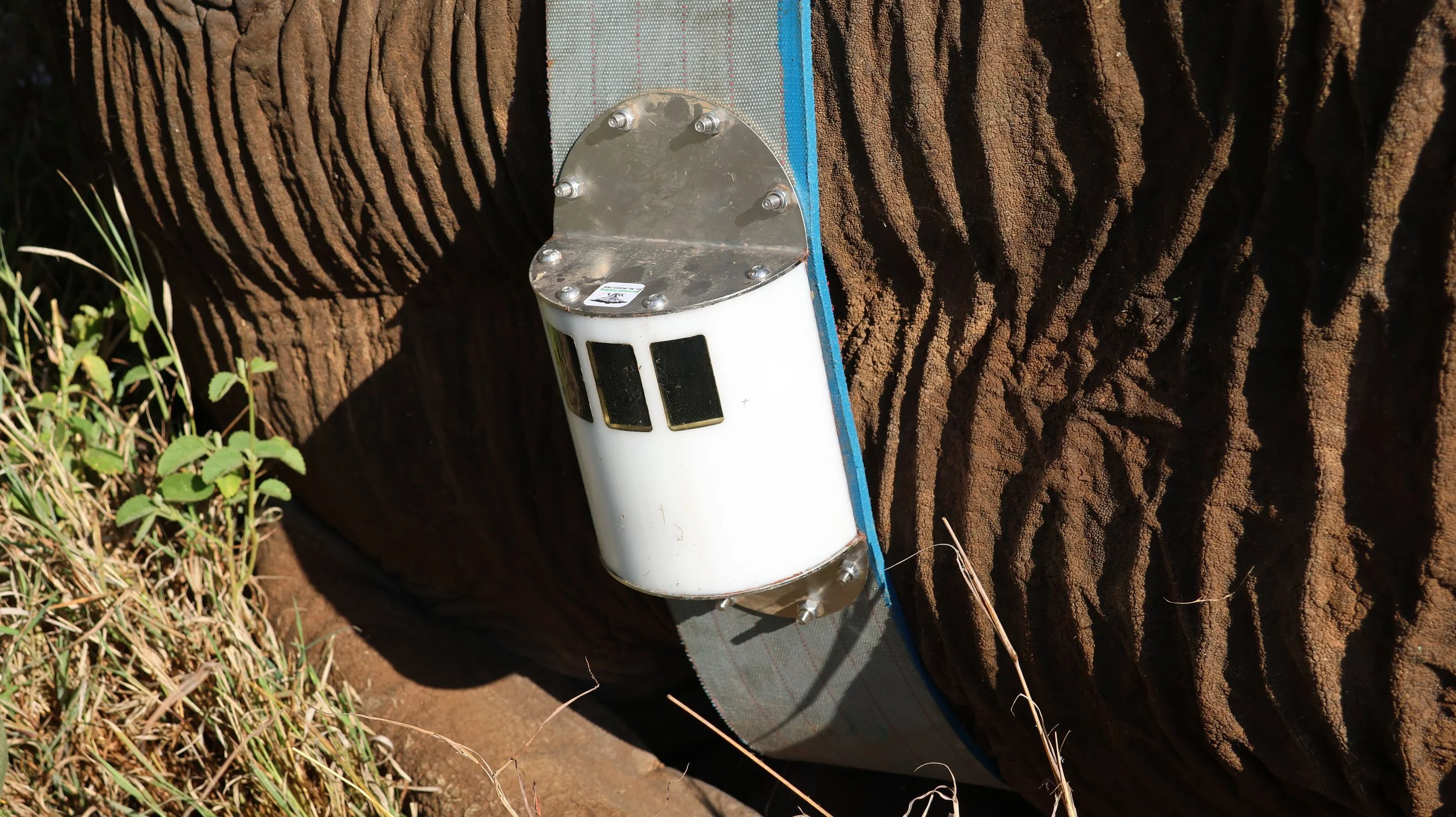
Whenever an animal is under anaesthesia, you’re completely responsible for it. We’re listening to its breathing, checking its heart rate, monitoring its temperature and making sure the depth of anaesthesia remains appropriate. The collar itself is designed to have minimal impact on the animal. A female elephant might weigh around three tonnes, while some of our biggest bulls in Kenya weigh seven tonnes, around 7,000 kilograms. The collar weighs only about 10-12 kilograms. The heaviest part is actually the counterweight, which keeps the GPS component sitting correctly on top of the neck. For an elephant, relative to its weight, this is light. It’s like wearing a pendant.
How much time do you have to complete the operation?
We normally aim to finish within about forty minutes. Within that time we fit the collar, make sure it’s functioning correctly, attach the counterweight underneath so the GPS unit remains properly positioned on top, and where necessary collect blood samples for research. Once everything is complete, we administer the reversal drug. Because we put the elephant to sleep, we also have the responsibility of waking it up safely.
What is one operation you will never forget?
There are risks for both wildlife and veterinarians. We do everything possible to minimise them, but conservation sometimes comes at a personal cost. I spent a year in hospital because of a black rhino. I was treating it when, just before it went down, it suddenly turned. In trying to get away, I tore my ACL, and I still walk with a slight limp today. It was just one operation among many, but it’s certainly the one I’ll never forget. Black rhinos are naturally very aggressive animals. Everything happened in a split second, and I ended up going through multiple surgeries. But I came back to the job because because I love this work.
After nearly two decades working with wildlife, what keeps you motivated?
Wildlife conservation is exciting; there’s never a dull moment. Every day brings a new challenge, and that is what keeps me motivated. Everything we do is for the benefit of wildlife, but it is also for the benefit of people. The information we collect from these animals helps us make better decisions, protect important habitats and reduce conflict. Conservation is not just about saving animals; it is about finding ways for people and wildlife to coexist for generations to come. For me, being able to contribute to that process and see the impact of this work is what makes it worthwhile.
