
Perspective 2026: Elephants Don’t Live in Parks - They Live in Landscapes
Elephants don’t live in parks.
They live in landscapes.
They move along routes shaped by water, seasons, and memory. Across borders, through community land, along rivers and corridors that have held life for generations. When those landscapes remain connected, ecosystems function. When they fragment, everything feels the pressure: people, wildlife, and the systems that support them both.
This is the starting point for Space for Giants in 2026: conservation only works when the scale of our thinking matches the scale of nature.
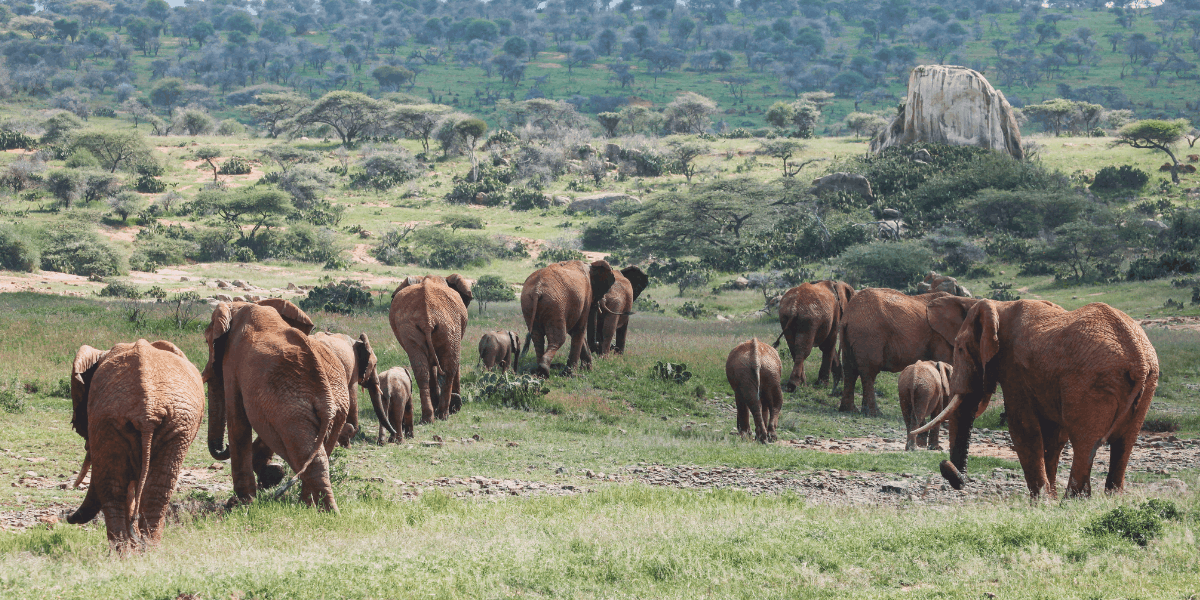
The unit of success is the landscape
Conservation has often been described in fragments: a species, a protected area, a crisis, a response. But nature doesn’t operate in fragments, and neither can conservation.
A landscape is not just geography. It is an interdependent system: land use, migration routes, water, governance, community livelihoods, security, economics, and the invisible relationships that allow ecosystems to remain resilient over time.
Elephants are a powerful symbol within this system. They are often called ecosystem engineers, shaping habitats, dispersing seeds, opening access to water, and influencing which plants and species can thrive. But elephants are also indicators: living signals of whether a landscape is healthy enough to sustain life at scale.
When elephants are under pressure, it is rarely only an elephant problem. It is a landscape problem.
Coexistence is where conservation succeeds or fails
Across Africa, people and wildlife are increasingly sharing the same space, not by choice, but by necessity. As landscapes become fragmented by farms, fences, infrastructure, and development, ancient routes collapse into conflict zones. What remains is pressure on both sides: crops destroyed, livelihoods threatened, and wildlife placed at risk in landscapes that no longer have room to function as they once did.
Effective conservation is not about choosing between people and wildlife.
It is about designing practical, durable systems where both can survive and thrive.
That is why Space for Giants does not operate as a project-based organisation. We operate as a systems-builder, securing Africa’s most important landscapes by building the ecological, financial, political, and human systems that allow wildlife and communities to thrive together, long-term.
Conservation must pay for itself
If conservation is to endure, it must be financeable, not occasionally, but consistently. Enterprise, carbon, tourism, and consulting are not add-ons; they are mechanisms for durability and independence.
This is part of the institutional logic for 2026: solutions that work at scale must be designed to hold financially, not just ecologically.
Leadership unlocks scale
Landscape protection is rarely limited by the absence of ideas. It is limited by the absence of aligned leadership: policy, political will, governance pathways, and the long-term partnerships required to move from projects to systems.
When conservation succeeds, it is often because leadership made space for it to succeed, through decisions that allow landscapes to remain connected and communities to remain secure.
Protect What Endures
In 2026, Space for Giants is building toward a single institutional platform: Protect What Endures. Not as a mass appeal, but as a clear statement of what conservation must become.
Protecting what endures means protecting the systems that keep landscapes functional: space, coexistence, durable finance, and the leadership required to hold the line over time.
What we’ll share next
In the weeks ahead, we’ll take this perspective into the real places where it is being tested:
Pian Upe, Uganda: the start of long-term landscape restoration and co-management
Gabon: coexistence solutions designed to hold at national scale
Suyian Conservancy, Kenya: a four-pillar model linking people, land, wildlife, and finance
If this perspective resonates
Subscribe to our monthly newsletter for grounded updates from the landscapes where we work.
And if you’re looking for a direct way to support long-term conservation systems, you can donate at any time, quietly, consistently, and with impact.
Subscribe, Support, Learn
Subscribe to our newsletter - https://www.spaceforgiants.org/newsletter-sign-up
Support our long-term conservation efforts - https://www.spaceforgiants.org/support-us
Learn about our work in Uganda - https://www.spaceforgiants.org/space-for-giants-in-uganda
Learn about our work in Gabon - https://www.spaceforgiants.org/space-for-giants-gabon
Learn about our work in Kenya - https://www.spaceforgiants.org/space-for-giants-in-kenya
